
For many new franchise owners, the biggest check goes to a building. A lease and a buildout can tie up cash for months before the first customer shows up. A home-based franchise skips that step.
You run a proven brand from your home office and put your capital into finding customers. That shift changes how you plan your first year.
The advantages of home based franchises go beyond rent savings, though. Your schedule and your growth path both change when you don’t need a storefront. This guide walks through each benefit and the trade-offs that come with it.
In addition to exploring the unique advantages of home-based businesses, we’ll share real numbers from Fitness Machine Technicians’ 2025 Franchise Disclosure Document (FDD), the legal document a franchisor must give you before you buy.
Key Takeaways
- The cheapest square footage in franchising is the space you already own.
- In FMT’s 2025 FDD, rent and leasehold improvements both start at $0 for home-based owners.
- A branded service vehicle can do the marketing work a storefront sign would do.
- Ongoing fees still apply at home, so budget for royalties and local ads every month.
- Running from home gives you more control over your calendar, but customers still set the pace.
What Is a Home-Based Franchise?
A home-based franchise is a franchise business you run from your home instead of a leased storefront or office. Its two main advantages are lower startup costs, since you skip rent and buildout, and more control over your schedule. You still get the franchisor’s brand and its tested operating system.
In any franchise, you pay a company (the franchisor) for the right to use its name and methods. You usually do this in a defined area called a territory. What changes with a home-based model is where the business lives day to day.
Home-based franchises come in a few forms. Some run almost entirely from a desk, like staffing or consulting. Others are mobile service businesses.
In a mobile service model, the office is at home, but the work happens at the customer’s site using a service vehicle.
That mobile hybrid is worth a closer look. It keeps home-based costs while letting you serve commercial clients who need hands-on work. Brick-and-mortar franchises sit at the other end, where customers have to come to a retail or restaurant space.
A home-based business with one technician or team member can be a great way to get your start. Businesses that start small actually make up a big chunk of companies in the United States. According to SBA Office of Advocacy data, there are 36,207,130 small businesses in the U.S. Of those, 82.3%, or 29,811,495 firms, have no employees at all.
7 Advantages of Home Based Franchises
Each advantage below comes back to one idea. Money you don’t spend on a building can go toward serving customers and growth instead.
We start with startup costs because that’s where the gap is widest. Then we move into the day-to-day benefits of running from home and how the model grows with you.
1. Lower Startup Costs
A storefront franchise usually needs a signed lease and a full buildout before it opens. A home-based franchise can skip both. That’s the clearest of all the advantages of home based franchises. For many home-focused franchises, the FDD shows it in plain numbers.
FMT’s 2025 FDD, for example, estimates a total initial investment of $65,950 to $127,990. That range comes from Item 7, the universal section that lists the startup costs a new owner should expect. The low end assumes a home-based office.
As you compare home-based business models, consider the selected line items from Item 7 of FMT’s 2025 FDD:
| Item 7 Line Item | Estimated Range |
|---|---|
| Initial franchise fee | $25,000–$45,000 |
| Rented/Leased space (3 months) | $0–$3,600 |
| Leasehold improvements | $0–$5,000 |
| Equipment and furnishings | $500–$2,000 |
| Signage (vehicle wrap) | $1,800–$3,500 |
| Initial inventory and tools | $0–$3,000 |
| Insurance | $2,500–$5,000 |
| Service vehicle (3 months) | $1,350–$1,950 |
| Pre-opening and first-year marketing package | $12,000–$14,000 |
| Additional funds | $15,000–$25,000 |
| Total estimated initial investment | $65,950–$127,990 |
Leasehold improvements are changes you make to a rented space, like walls or wiring, and they can be $0 when you work from home.
Notice where the money goes once rent drops out. Outside the franchise fee, the largest rows are additional funds (working capital) and the marketing package. In other words, a home-based budget puts more of your cash into reserves and finding customers.
The initial franchise fee is listed in Item 5, the FDD section on fees paid before opening. FMT’s fee is $25,000 for a Hometown territory or $45,000 for a Full-Size territory.
Veterans can take 15% off the initial fee through VetFran, a franchise discount program for military veterans. You can learn more about veteran franchise opportunities on our blog.
2. Low Ongoing Overhead
It costs money to keep your business running each month, whether or not you book a job. But without a storefront, you have no monthly lease payment or no front-counter staff to schedule. That lower cost line can make slow weeks easier to handle in your first year.
The Fitness Machine Technicians franchise opportunity is built this way. Owners can launch with a single technician and add staff once they have the customer base to support it. The model also avoids tying up capital in parts and stock, and the FDD shows initial inventory and tools starting at $0, an estimate that applies only when the owner already has suitable tools. Otherwise, the owner must purchase the tools their technician needs, including any specialty tools.
3. Faster Path to Opening
A storefront opening depends on lease talks and construction schedules. A home-based business has neither. Instead, the timeline is mostly about training and setup. That means you can start serving customers sooner.
FMT’s 2025 Franchise Disclosure Document estimates 30 to 60 days from signing to opening. Owners must open within 90 days. These figures come from Item 11, the FDD section on franchisor support and opening timelines.
4. Schedule Control and Minimal Commute
When your office is at home, your commute to the desk is a few steps. You can handle scheduling and billing early in the morning, then head out to customer sites. If you’re leaving a corporate job, that control may be the biggest change you notice.
Be honest with yourself about one thing, though. Service businesses run on the customer’s clock. A gym with a broken treadmill wants it fixed soon, so some days will fill up fast.
Planned work helps balance this out. Preventive maintenance visits can be booked weeks ahead, giving your calendar a steady base around the urgent calls.
5. Possible Tax Advantages
Working from home may open up tax deductions that a storefront owner can’t claim. The two most common involve your home office and your vehicle. Rules change, so treat this section as a starting point and consult a tax professional before you file.
The IRS simplified home office option allows a standard deduction of $5 per square foot of home used for business. It caps at 300 square feet, for a maximum of $1,500. To qualify, the space must be used regularly and exclusively for business, so a kitchen table you also eat at won’t count.
Mobile service owners drive a lot, which makes mileage worth tracking. Under the IRS standard mileage rates, the business rate is 76 cents per mile for July 1 through December 31, 2026. The rate was 72.5 cents per mile for January 1 through June 30, 2026.
6. A Proven System With Training and Support
When you buy a franchise, you buy a method that has already been tested in the field. That matters most when you’re new to the industry. You follow a playbook instead of guessing at pricing or service steps.
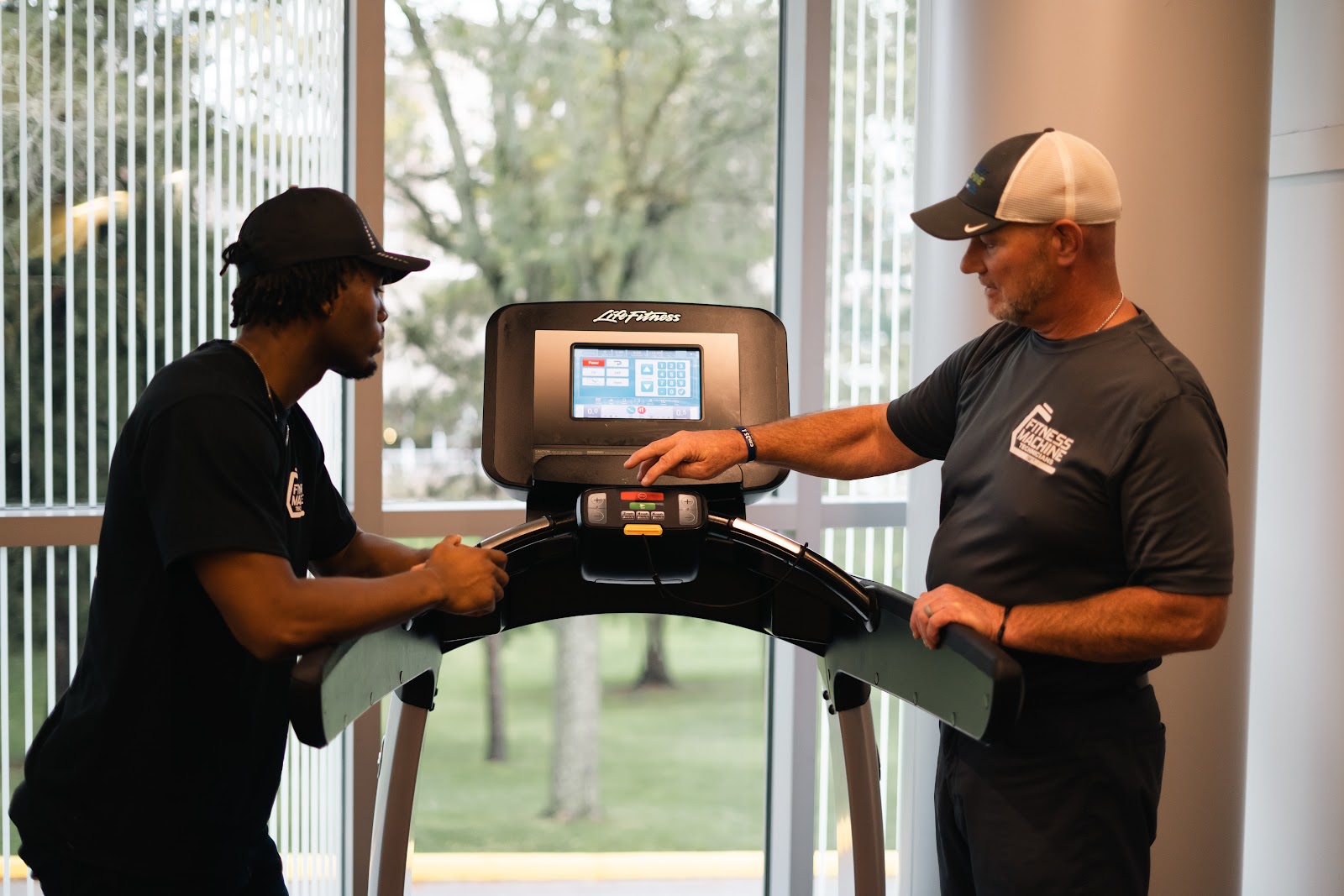
Fitness Machine Technicians provides 6 hours of in-home video training plus 80 hours of hands-on training in Charlotte, NC. Owners also get FMT’s proprietary playbook, detailing everything from procedures to pricing. In addition, ongoing support means you have answers to questions as they come up.
7. Room to Scale Beyond Your Home
Starting at home still leaves plenty of room to grow. The next step involves adding technicians and vehicles, since each new vehicle covers more of your territory. Your home office can run that larger team for a while.
When you outgrow the house, FMT’s 2025 Franchise Disclosure Document allows a leased space of up to about 2,000 square feet. That’s typically a garage or light industrial unit. You can also add territories, with 30% off additional territories signed at the same time as your first.
Recurring revenue makes this growth easier to plan. FMT owners sell preventive maintenance programs and handle national OEM service contracts. OEM stands for original equipment manufacturer, the company that built the machine.
Trade-Offs to Weigh Before You Buy
Every model has costs. Home-based franchises are no exception. The first is isolation. If you’re used to an office full of coworkers, a solo start can feel quiet, so plan for regular contact with other owners. Joining local small business support organizations can help network and solve problems.
Without good boundaries, your home life and work can also blur together. A dedicated office with a door helps. So do set working hours. You’ll also need to check local zoning; depending on where you live (and work), you may need a special permit to operate from home.
Sales are on you, too. No storefront means no walk-in traffic. Your growth depends on relationships and local marketing. That’s why the ongoing fees below include a local advertising requirement.
Finally, don’t forget about royalties. A royalty is a percentage of your sales you pay the franchisor for ongoing use of its brand and system. Item 6 of the FDD lists royalties and other recurring fees. Here’s what FMT’s 2025 Franchise Disclosure Document shows:
| Ongoing Fee | Amount |
|---|---|
| Royalty | 6% of the first $499,999 in gross sales per year; 5% above $500,000 |
| Royalty minimum | $500 per month, starting in the 13th month |
| Brand development fee | 1% of gross sales (may rise to 2%) |
| Software fee | Estimated $100–$250 per month |
| Local advertising | The greater of $1,000 per month or 1% of gross sales, starting in month 4 |
Low startup cost makes the door easier to open, but they’re not the only factor. These monthly fees decide what it costs to stay in business. Build them into your plan from day one.
One practical test helps here. Add the royalty minimum and the local advertising floor together, then ask how many jobs it takes to cover that number each month. Your validation calls with current owners are the right place to pressure-test that math.
Industries That Fit the Home-Based Model
The home-based model works best when the work happens at the customer’s location. Home services, senior care, pet services, cleaning, and fitness equipment service all fit that pattern. In each one, a vehicle and a phone matter more than a lobby.
To compare specific brands side by side, see our list of the best home-based franchise businesses. Look closely at which ones serve both homes and businesses, because that mix spreads your demand across more customer types.
How Fitness Machine Technicians Puts These Advantages to Work
FMT started with a problem, long before it was a franchise. Don Powers owned a gym, Aero Centre in King of Prussia, PA. He watched equipment break down and found few good repair options.
So in 2002, Don began fixing the equipment himself, ultimately deciding to fill a gap in the fitness industry.Powers began franchising the concept in 2012, but that’s only the start of the Fitness Machine Technicians brand story.
Don’s ethos and commitment to gym-owner service for gym-owners still shapes the model today. Owners run from a home office with a service vehicle and work on-site at commercial and residential locations. Accounts include gyms, hotels, schools, apartment communities, corporate wellness centers, and home gyms.
The ongoing demand comes from how many people rely on this equipment. A Health & Fitness Association report found that 81 million Americans belonged to a fitness facility, such as a gym or studio, in 2025. That’s an all-time high and a 5.2% increase from 2024.
Every one of those facilities runs on machines that wear out. FMT positions owners to claim a piece of a $36 billion industry with service that keeps that equipment working.
How to Research a Home-Based Franchise
Start with yourself before you study any brand. Ask whether you’re comfortable selling and working solo in the early months. If those answers are yes, you’re ready to dig into the documents.
Then read the FDD closely, ideally with the help of a dedicated franchise attorney. Items 5 and 6 cover fees, and Item 7 covers startup costs. Item 11 explains training and the opening timeline. Item 19 is where a franchisor may share financial performance data, if it chooses to, so read it carefully and ask questions.
Next, talk to current owners. This step is called validation, and it’s your chance to hear what the business is really like. Ask about their first year and how the support compares to what they expected.
FMT lays out the path to ownership in clear steps:
- Initial phone call
- Behind-the-scenes webinar
- FDD and Franchise Agreement review
- Finance introduction
- Validation with franchisees
- Discovery Day at headquarters
- Decision
- Training
- Grand opening
Have more questions along the way? Our franchise ownership FAQs cover the most common ones.
Frequently Asked Questions
What are two advantages of home based franchises?
Two main advantages are lower startup costs, because you skip rent and buildout, and more control over your schedule. In FMT’s 2025 Franchise Disclosure Document, rent and leasehold improvements both start at $0 for home-based owners.
How much does it cost to start a home-based franchise?
Costs vary by brand, so check Item 7 of each FDD. FMT’s 2025 Franchise Disclosure Document estimates a total initial investment of $65,950 to $127,990.
How quickly can a home-based franchise open?
Without construction, many can open within a couple of months. FMT’s 2025 Franchise Disclosure Document estimates 30 to 60 days from signing to opening, with a 90-day deadline to open.
What fees come with a home-based franchise?
Expect ongoing fees like royalties and local advertising, which are listed in Item 6 of the FDD. FMT charges a 6% royalty on the first $499,999 in yearly gross sales and 5% above $500,000, plus a 1% brand development fee.
Can I deduct a home office if I run a franchise from home?
You may qualify if the space is used regularly and exclusively for business. The IRS simplified option allows $5 per square foot, up to 300 square feet, but consult a tax professional to confirm what applies to you.
Is a Home-Based Franchise Your Next Move?
A home-based franchise gives you a proven brand without the weight of a storefront. You keep startup costs lower and can open in weeks instead of months. The trade-off is that you drive the sales and pay ongoing fees from the start.
If you want a hands-on service business with recurring work, fitness equipment repair is worth a close look. Learn more about Fitness Machine Technicians, then take the next step and see how this franchise opportunity could fit your goals.