
If you’re comparing franchise brands, you probably already know you want steady revenue from business customers instead of chasing one-off consumer sales. The harder part is picking an industry without taking on overhead you can’t carry or signing with the wrong brand.
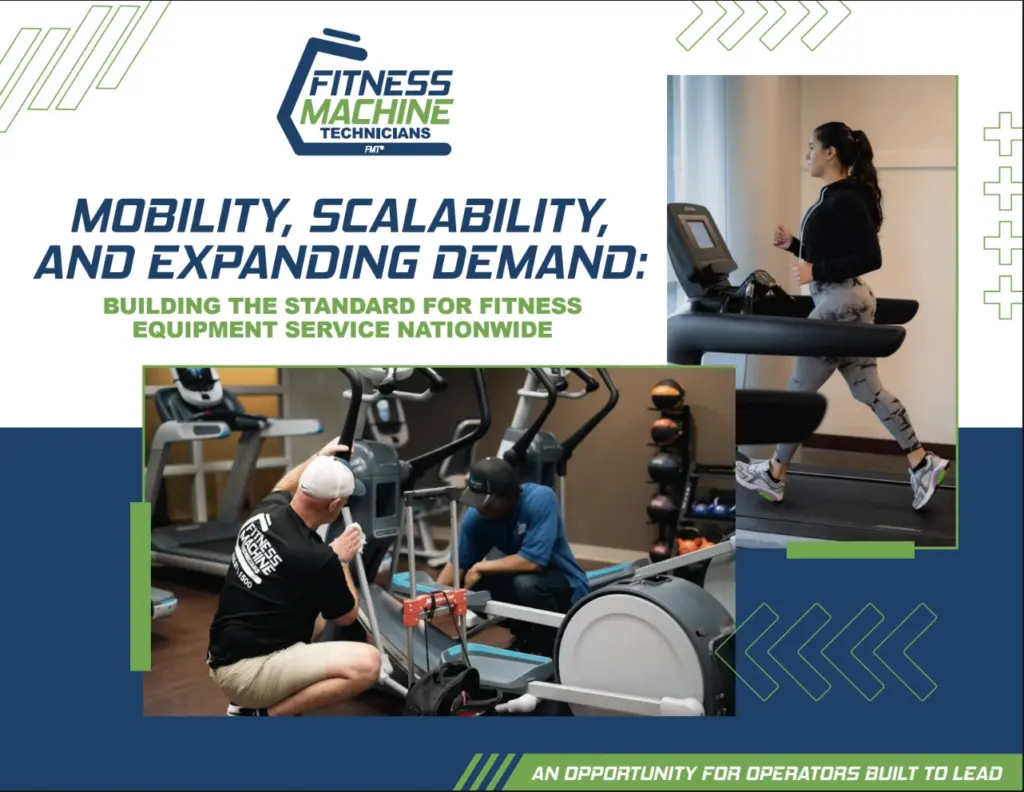
Fitness Machine Technicians, a fitness equipment repair and preventive maintenance franchise, serves gyms, hotels, colleges, and apartment buildings from home, with no storefront. Building a business-to-business (B2B) service franchise since 2012 has taught us quite a bit about what works well. This guide shares those details while treating every industry fairly. We’ll compare the top B2B franchise industries, then use a real cost example from our most recent Franchise Disclosure Document (FDD) to illustrate how a B2B franchise works.
Key Takeaways
- Entrepreneurs should favor industries where business customers book scheduled, recurring work. Fitness equipment service is one example, since the 81 million Americans HFA counted as fitness facility members in 2025 use machines that need upkeep.
- Check whether a model needs a storefront before you compare fees, since home-based service franchises skip rent and buildout and free up more of your startup budget.
- Budget for labor as the hidden cost in cleaning and staffing, and ask each franchisor how many people you’ll need to hire in your first year.
- Treat Item 19 gross revenue as sales before expenses, then build your own estimate of royalties and operating costs to see what an owner keeps.
- Use the 14 days the FTC requires between receiving an FDD and signing to call owners listed in Item 20 about their first months.
What Is the Best Industry to Buy a B2B Franchise?
No single industry is best for every buyer. The best industries to buy a B2B franchise often have recurring business demand, low overhead, a manageable hiring plan, and proven franchisor support. Common examples include commercial cleaning, staffing, IT services, and equipment maintenance.
A B2B franchise sells to companies, such as hotels or schools. A business-to-consumer (B2C) franchise sells to individual shoppers. Common B2C franchises can include restaurants, childcare providers, and gyms. B2B owners usually conduct fewer transactions than B2C ones, but each account can be larger and tied to a contract.
Those accounts sit inside a growing sector. The IFA 2026 Franchising Economic Outlook projects: “The number of franchise establishments will grow from 832,521 to 845,000 units – an increase of 1.5%.” That makes franchising an attractive business opportunity for those who want to serve businesses in their communities.
Top B2B Franchise Industries to Consider
Service sectors lead the projected growth. The IFA 2026 Outlook summary states: “Child services and commercial and residential services are expected to be the fastest growing industries.” Per the FRANdata 2026 outlook overview, commercial and residential services “is projected to grow output 3.2% on the strength of aging housing stock and essential service demand.”
As you explore franchise ownership in this space, compare each business’s franchise disclosure document (FDD) for detailed financial details and, in many cases, performance examples.
| Industry | Who Buys | Revenue Pattern | Storefront? | Skills |
| Commercial cleaning | Offices, schools | Recurring contracts | Usually no | Heavy hiring |
| Staffing | Employers | Placement fees | Often an office | Recruiting |
| IT services | Small businesses | Monthly plans | Usually no | Technical |
| Marketing services | Local businesses | Projects, retainers | Usually no | Sales |
| Signage | Retailers, builders | One-time projects | Often a shop | Design |
| Commercial restoration | Property managers | Emergency jobs | Often a warehouse | Certification |
| Commercial equipment maintenance | Gyms, hotels, colleges, apartments | Repairs plus contracts | No | Taught in training |
For those who want to open a B2B franchise without a physical location, cleaning, IT services, and commercial equipment maintenance can provide a path to franchise ownership that doesn’t rely on real estate to run smoothly.
Commercial Cleaning and IT Services
Commercial cleaning sells nightly or weekly service to offices. Contracts repeat, which helps you plan, but you will hire and replace crews often.
IT and managed services franchises support company computers and networks, often on monthly plans. Those plans are easier to forecast, but you need tech skills or a budget for technicians.
Commercial Equipment Maintenance and Repair
Equipment service is a narrower niche with a simple driver: commercial machines wear out. The HFA 2026 consumer report counts the people using them. “81 million Americans belonged to a gym, studio, or other fitness facilities in 2025, marking an all-time high and a 5.2% increase from 2024.” That makes ownership of a fitness equipment repair franchise an attractive proposition, especially for aspiring franchisees who don’t want the footprint of a physical retail or shop location.
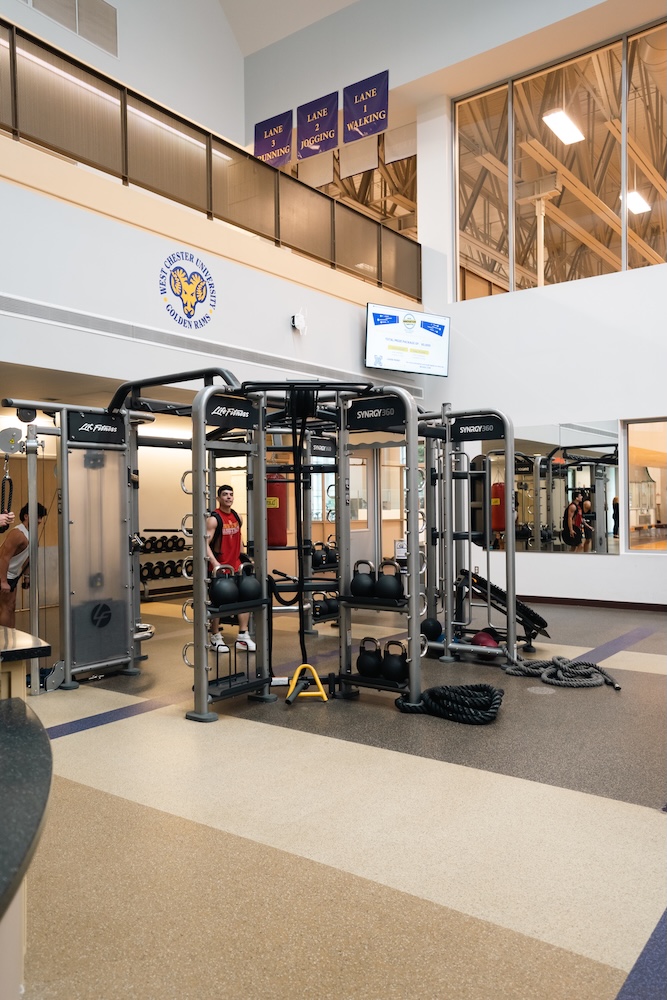
Fitness Machine Technicians sits within this space, providing much-needed gym equipment repairs for customers as diverse as colleges, universities, hotels, apartment buildings, and individuals. It calls the market “not seasonal in nature” and includes a National and Regional Accounts program. Much of the work is preventive maintenance (PM), meaning scheduled check-ups that catch wear before a machine breaks. PM contracts put repeat visits on the calendar. Learn more about our B2B fitness equipment service model.
How Much Does a B2B Franchise Cost?
Costs vary by industry, and models that need a warehouse or shop usually cost more to open. Storefront-free service models skip rent and buildout.
In Fitness Machine Technicians’ 2026 FDD, Item 7 (the startup cost estimate) lists a total initial investment of $65,950–$127,990. A royalty is an ongoing fee paid to the franchisor as a share of Gross Sales (all revenue before expenses).
| Fee | Amount (FMT 2026 FDD) |
| Initial franchise fee | $25,000 Hometown / $45,000 Full-Size |
| Royalty | 6% of first $499,999 Gross Sales per year, 5% above $500,000 |
| Brand Development Fee | 1% of Gross Sales |
Item 19 is where a franchisor may share financial performance data. In FMT’s 2026 FDD, average 2024 Gross Revenue was $489,562 for 41 franchisees that operated 129 franchised Businesses during the 2025 fiscal year. Your individual results may differ. Remember, of course, that Gross Revenue is not profit. For more cost questions, see our franchise startup costs and FAQs.
How to Evaluate Any B2B Franchise Before You Buy
The FTC franchise buying guide sets the review timeline. “[Y]ou must receive the document at least 14 days before you are asked to sign any contract or pay any money to the franchisor.”
Use that window to ask:
- Do customers need the service on a repeat schedule?
- Would losing one large account hurt the business?
- How many employees does year one require?
- Is your territory (your sales area) protected?
- What training and support does the franchisor provide?
- How many units opened and closed recently, per Item 20?
- Which units does the Item 19 data include?
Item 20 lists outlet openings and closings, plus contacts for current and former owners.
For what it’s worth, the FBR Franchising Outlook 2026 states the following: “Large brands grew unit counts over three times faster than smaller systems in 2025, and posted revenue nearly seven times higher.” That data covers all industries and does not predict any single owner’s results.
Ask each franchisor to walk you through its franchisee training and support. At FMT, that includes 15–17 hours of virtual classroom training and 80 hours of hands-on training.
Frequently Asked Questions
Is a B2B franchise more profitable than a B2C franchise?
Neither model is more profitable by default. Compare each brand’s Item 19 data and expenses.
How much does it cost to buy a B2B franchise?
Costs vary by brand, so check Item 7 of each FDD. Fitness Machine Technicians’ 2026 FDD lists a total estimated initial investment of $65,950–$127,990.
What should I look for in a franchise disclosure document?
The FTC advises reading all 23 Items, focusing on startup costs (Item 7), financial performance (Item 19), outlet data (Item 20), and financial statements (Item 21). Have a franchise attorney review the agreement before you sign.
Can I run a B2B franchise from home?
Many service-based B2B franchises can, because the work happens at the customer’s site. Fitness Machine Technicians’ 2026 FDD allows a home-based business.
Find the B2B Franchise That Fits Your Goals
The top B2B franchise industries share repeat demand from business customers. The right pick depends on your budget and hiring appetite.
Fitness Machine Technicians has focused on fitness equipment service since 2012. Founder Don Powers designed it to be built by technicians and scaled by owners. Read the Fitness Machine Technicians brand story to learn how we started and contact us for more information about this exciting franchise opportunity.