
Texas ranks as one of the top states for franchise ownership, thanks to more than just low taxes—including no state income taxes— and population growth. The state’s geography and layout make it heavily car-dependent. In addition, commercial expansion creates strong demand for service-based businesses that can cover ground without a storefront.
This guide breaks down the top franchise categories performing well in Texas and compares investment levels. We’ll also explore how to evaluate opportunities in major metros like Dallas, Houston, Austin, and San Antonio. Finally, we’ll discuss why Fitness Machine Technicians is an attention-worthy franchise.
Why Texas Is One of the Best States for Franchise Ownership
Texas ranks among the top states for franchise ownership thanks to its business-friendly climate, rapid population growth, and car-dependent geography. Quick-service restaurants, automotive services, and B2B logistics all perform well here. But service-based models in fitness, home repair, and commercial maintenance are picking up momentum fast.
A few things make Texas stand out for franchise owners:
- No state income tax: You keep more of your earnings to reinvest in growth.
- Population growth: Texas metros are among the fastest growing in the nation, expanding demand for consumer and commercial services alike.
- Geographic spread: The state’s size and car-dependent layout favor mobile, territory-based models. These brands cover lots of ground without a storefront.
These conditions create a strong environment to build a scalable business opportunity without heavy real estate investment.
Top Franchise Categories to Own in Texas
Not every category performs the same way in Texas. Here’s where demand tends to be strongest.
Fitness and Wellness Services
With a growing base of gyms, hotels, and home gym owners, service-based models like equipment repair and preventive maintenance offer recurring revenue without the volatility of membership sales.
Home Services and Repair
Texas’s housing growth drives demand for repair, maintenance, and installation services. Mobile franchises in plumbing, electrical, HVAC, and handyman work benefit from residential expansion and a preference for in-home service.
Food and Beverage
Texas-born brands like Wingstop and Whataburger have strong local loyalty. But food franchises require higher capital and real estate investment than service-based models. That’s great for owners comfortable with a storefront team.
Health and Personal Care
Senior care, medical staffing, and personal wellness franchises have expanded as Texas’s population ages. Many combine B2B contracts with direct consumer services for multiple revenue streams.
Commercial and Business Services
Franchises serving other businesses, such as The UPS Store, commercial cleaning, and B2B logistics, benefit from Texas’s commercial growth and suit owners who prefer working with business clients over consumers.
Best Franchises to Own in Texas by Industry
Once you’ve identified a category, the next step is comparing specific franchise types:
| Franchise Type | Business Model | Typical Investment Range |
| Fitness Equipment Service | Home-based, mobile | Lower |
| Home Services | Home-based, mobile | Lower to mid |
| Food/QSR | Storefront required | Higher |
| Commercial Cleaning | Home-based | Lower to mid |
Fitness Equipment Service Franchises
Fitness equipment service franchises handle repair, preventive maintenance, and warranty service for gym equipment, serving gyms, hotels, schools, and homeowners with home gyms.
The model typically operates from a home office with mobile delivery. Revenue comes from a mix of one-time repairs and recurring maintenance contracts.
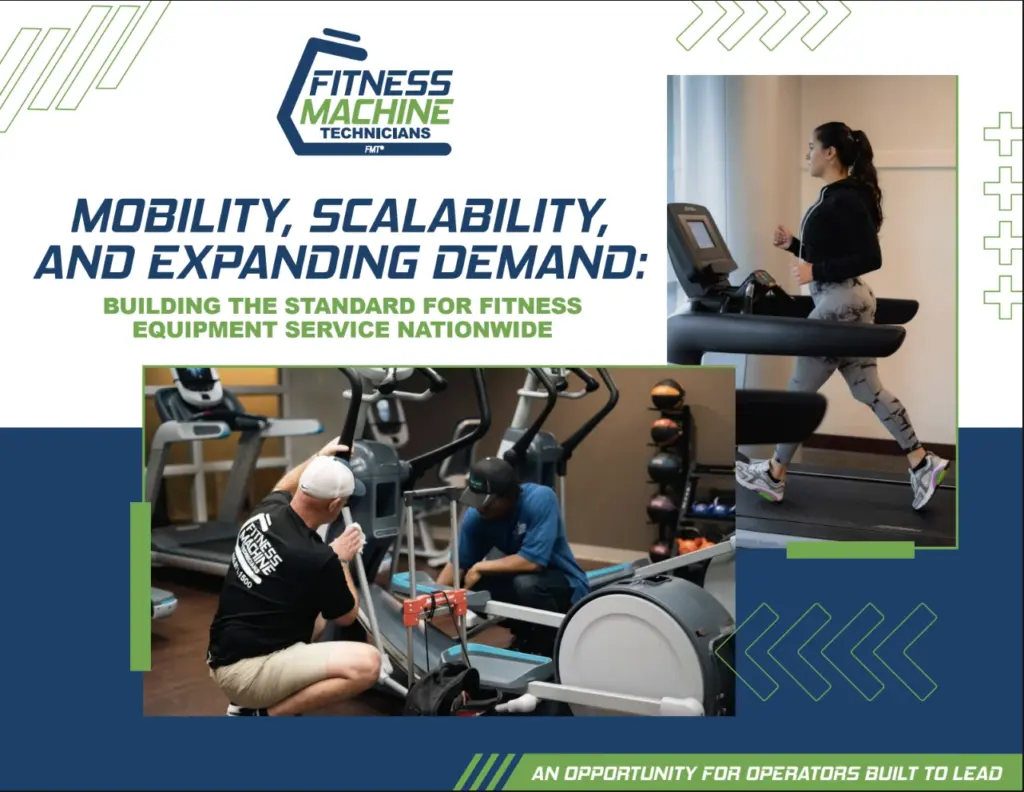
Fitness Machine Technicians is one example. The brand offers defined territories and a structured path to ownership without the cost of a physical location. It’s also a brand built by someone who lived with the problem before franchising it. Founder Don Powers spent 20 years running gyms before he got tired of unreliable repair vendors and built the fix himself.
Home Services Franchises
Plumbing, electrical, HVAC, and general repair franchises operate on a similar mobile, territory-based model, with recurring revenue potential depending on service type; HVAC maintenance, for example, often offers stronger contracts than one-time repair work.
Food Franchises
QSR and fast-casual franchises require real estate, buildout, and higher staffing levels, offering brand recognition and proven demand at a substantially higher capital commitment, so review the FDD sections on buildout costs and royalties closely.
Commercial Cleaning Franchises
Commercial cleaning franchises serve offices, medical facilities, and schools on recurring contracts, typically with low startup costs, though margins can be tighter and competition higher than in more specialized categories.
Top Texas Metros for Launching a Franchise

Territory availability varies by metro, and each market has different demand characteristics.
Dallas-Fort Worth
Dallas-Fort Worth is the largest metro in Texas, with a concentration of corporate headquarters and a diverse B2B customer base, though competition for territories can be higher here.
Houston
Houston’s energy sector, Texas Medical Center, and large residential sprawl create demand for mobile service businesses across a wide geographic spread.
Austin
Tech growth, a younger population, and a fitness-conscious demographic make Austin attractive for wellness and service franchises, though the market is competitive and real estate costs run higher, which matters less for home-based models.
San Antonio
Military presence, tourism, and residential development support franchise demand in San Antonio, which often has more territory availability than Dallas or Austin.
Franchise Investment Levels in Texas
Investment requirements vary widely by franchise type. Here’s a general breakdown of what to expect at each level. In addition to the initial franchise fee, carefully review royalty fees, marketing fees, and other costs.
Low-Cost Franchises Under 50K
Home-based service, mobile, and consulting franchises typically fall here, avoiding real estate and storefront buildout, with many launching as a single technician or operator.
Mid-Range Franchises Between 50K and 150K
Established service brands with some equipment or vehicle investment often fall here. They typically include a defined territory and more structured support. Common brands include home repair and some fitness equipment franchise models.
Higher Investment Franchises Over 150K
Food service, retail storefronts, and franchises requiring real estate or significant buildout fall here, with a higher capital commitment but often stronger brand recognition.
Most Profitable Franchise Models for Texas Owners
Profitability depends on many factors. The highest-revenue franchises aren’t always the most profitable for owners. The following qualities tend to drive stronger returns:
- Recurring revenue: Maintenance contracts and repeat service create predictable income and easier cash flow.
- Low overhead: Home-based models avoid rent, utilities, and storefront staffing costs.
- Scalability: Territory-based models grow by adding technicians or accounts rather than opening new locations.
Service-based franchises with recurring contracts often outperform retail and food concepts on owner profitability, even when top-line revenue is lower, because the math works differently without storefront rent.
How to Evaluate a Franchise Opportunity in Texas
If you’re new to franchise ownership, here’s a practical sequence for evaluating opportunities.
Step 1: Review the Franchise Disclosure Document (FDD)
The FDD is a legal document covering fees, obligations, territory terms, and franchisee turnover. Pay close attention to Item 19 (financial performance) and Item 20 (franchisee contacts).
Step 2: Validate With Existing Franchisees
Validation calls involve conversations with current franchise owners about support quality, realistic revenue, and day-to-day operations, using the contact information the FDD provides. A proven business model has worked well for previous franchisees.
Step 3: Confirm Territory Availability
Texas metros may have limited territories, especially in Dallas, Houston, and Austin, so check availability early before investing weeks in a brand that can’t offer your market.
Step 4: Model Startup Costs and Recurring Revenue
Understand both the initial investment and the ongoing revenue potential before committing, since a lower startup cost doesn’t always mean a better opportunity.
Why Service-Based Franchises Thrive in Texas
Texas’s growth creates demand for services that support both businesses and residents, and service-based franchises with recurring revenue models are well-positioned to capture it.
The advantages include lower capital requirements than retail or food, recurring revenue through maintenance contracts, and scalability by adding technicians rather than locations.
For business owners who want to start lean and scale over time, this path doesn’t require a storefront or a large team from day one.
Start Your Texas Franchise Journey With Fitness Machine Technicians
Fitness Machine Technicians is now offering franchise opportunities built around fitness equipment repair and maintenance, serving gyms, hotels, schools, and homeowners. Owners launch a home-based business with lean startup costs, defined territories, and structured training that includes both virtual and hands-on instruction. The brand’s standards trace back to a founder who ran the operator side of this exact problem for two decades. That firsthand experience still shapes how franchisees are trained today.
If you’re exploring franchise opportunities in Texas and want a service-based model with recurring revenue potential, this is worth a closer look.
Contact us for more information or to schedule a discovery call.
Frequently Asked Questions About Owning a Franchise in Texas
What is the cheapest franchise to open in Texas?
Home-based service franchises typically have the lowest startup costs, since they avoid real estate and storefront buildout, with some launching under $50,000.
What franchise can I start with 100K in Texas?
Mid-range service franchises, including home repair and fitness equipment service, typically fall within this investment level, though costs vary by territory and market.
Which franchise model is most profitable for owners?
Franchises with recurring service contracts and low overhead tend to generate stronger returns for owners, often outperforming retail and food concepts, though results vary by market and operator.
Do I need a physical storefront to run a franchise in Texas?
Many franchise models, including fitness equipment service, home repair, and commercial cleaning, operate from a home office with mobile delivery, keeping overhead low and launch timelines fast.